
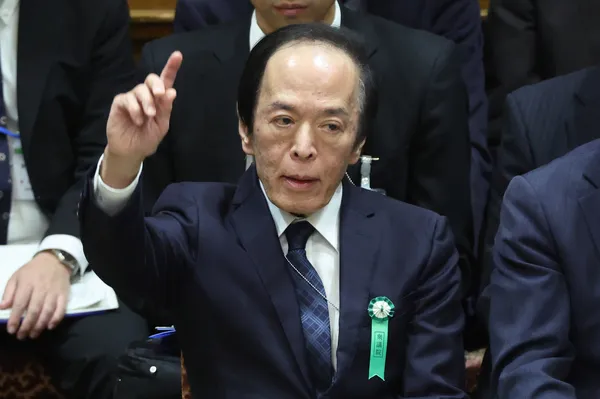
In an era where the global economic landscape is in constant flux, the recent remarks by Bank of Japan (BOJ) Governor Kazuo Ueda have drawn attention from the international financial community. Ueda's indication of potential interest rate hikes in the coming year, driven by his growing confidence in the BOJ's ability to reach its sustainable price target, has significant implications. This possible shift in monetary policy could have broad implications for Japan's economy and beyond.
Interest rates are a vital instrument central banks use to manage economic growth and inflation. When a central bank hikes interest rates, it essentially increases the cost of borrowing and slows down the rate of economic growth. This can lead to a slowdown in business expansion, a decrease in consumer spending, and potentially, a rise in unemployment. Conversely, it can also mean higher returns for investors and a stronger currency.
What does this mean for the average person? On the one hand, individuals with savings or investments may benefit from higher interest rates, as they could yield better returns. On the other hand, those with outstanding debts, such as mortgages or student loans, may find their interest payments increasing. This could leave less disposable income for other expenses.
For small businesses, higher interest rates could mean higher borrowing costs, leading to tighter profit margins. This could result in reduced business expansion or even layoffs. However, businesses that are less reliant on borrowed money and more on their own profits may weather this change better than others.
Investors, both domestic and international, will also face the consequences of these potential rate hikes. For those invested in Japanese bonds, higher interest rates could mean higher yields, making these investments more attractive. However, this could also lead to increased volatility in the bond market. For foreign investors, a stronger Japanese yen could either mean increased returns or losses, depending on their exposure to the currency.
In conclusion, while Ueda's increased confidence in the BOJ's ability to achieve its sustainable price target is a positive sign for the Japanese economy, the potential interest rate hikes he has signalled could have wide-ranging effects. These effects will not be evenly distributed and will vary depending on individual circumstances and exposure to the Japanese market. As always, it will be crucial for individuals, businesses, and investors to stay informed and adapt their strategies as necessary.
 Next
Next











Comments (0)
Leave a comment