
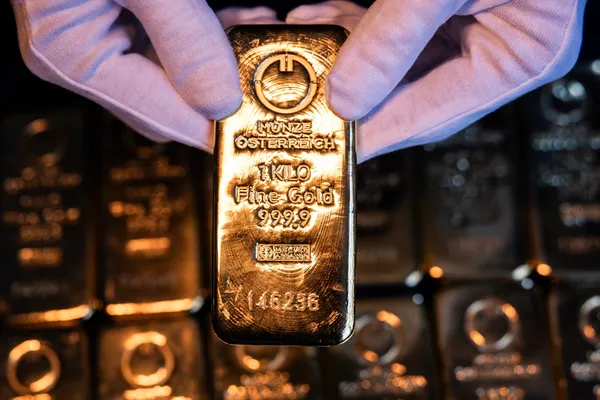
Gold, a traditional safe haven during times of financial uncertainty, has been on a tear. The precious metal has risen to an all-time high, fueled by escalating geopolitical tensions and bets on further US rate cuts. This surge has marked the best annual performance for gold in over four decades, a development that investors, small businesses, and policy-makers cannot afford to ignore.
The geopolitical tensions driving this upheaval revolve around Venezuela, a nation whose economy has been in a state of turmoil for some time. The situation in Venezuela has created a ripple effect that is reverberating through the global economy, pushing up the price of gold as investors scramble for safety. This, in turn, has implications for the average person, investor, and small business.
Rate cuts, on the other hand, have traditionally been a bullish indicator for gold. When the Federal Reserve lowers interest rates, it typically drives up the price of gold. This is because lower interest rates reduce the opportunity cost of holding non-yielding bullion, making gold more attractive to investors. With speculation rife about potential rate cuts in the US, this is another factor propelling the price of gold to record highs.
For the average person, this development may seem somewhat abstract. Yet, it has real-world implications. For instance, if you’re a salaried employee with a pension fund or 401(k) that invests in gold, the surge in gold prices could boost your retirement savings. Similarly, if you’re a small investor who has put money into gold as a hedge against inflation or financial uncertainty, you could see a significant return on your investment.
Small businesses, particularly those in the jewelry industry, could also be impacted by the soaring price of gold. For these businesses, the cost of raw materials could increase significantly, squeezing profit margins. However, businesses that deal in gold, such as pawn shops and gold dealers, could see a boost in profits as the value of their stock increases.
Policy-makers, too, need to be aware of these developments. The rise in gold prices could impact economic policy and financial stability, particularly in countries where gold plays a significant role in the economy. In addition, the geopolitical tensions driving the gold surge could require diplomatic and strategic responses.
Overall, the surge in gold prices reflects broader trends in the global economy and financial markets. Whether you’re an average person, an investor, a small business owner, or a policy-maker, it’s crucial to understand these trends and their potential impacts. The rise in gold prices is not just a headline; it’s a development that could affect your wallet, your business, your investments, and your nation’s economy.

 Next
Next









Comments (0)
Leave a comment